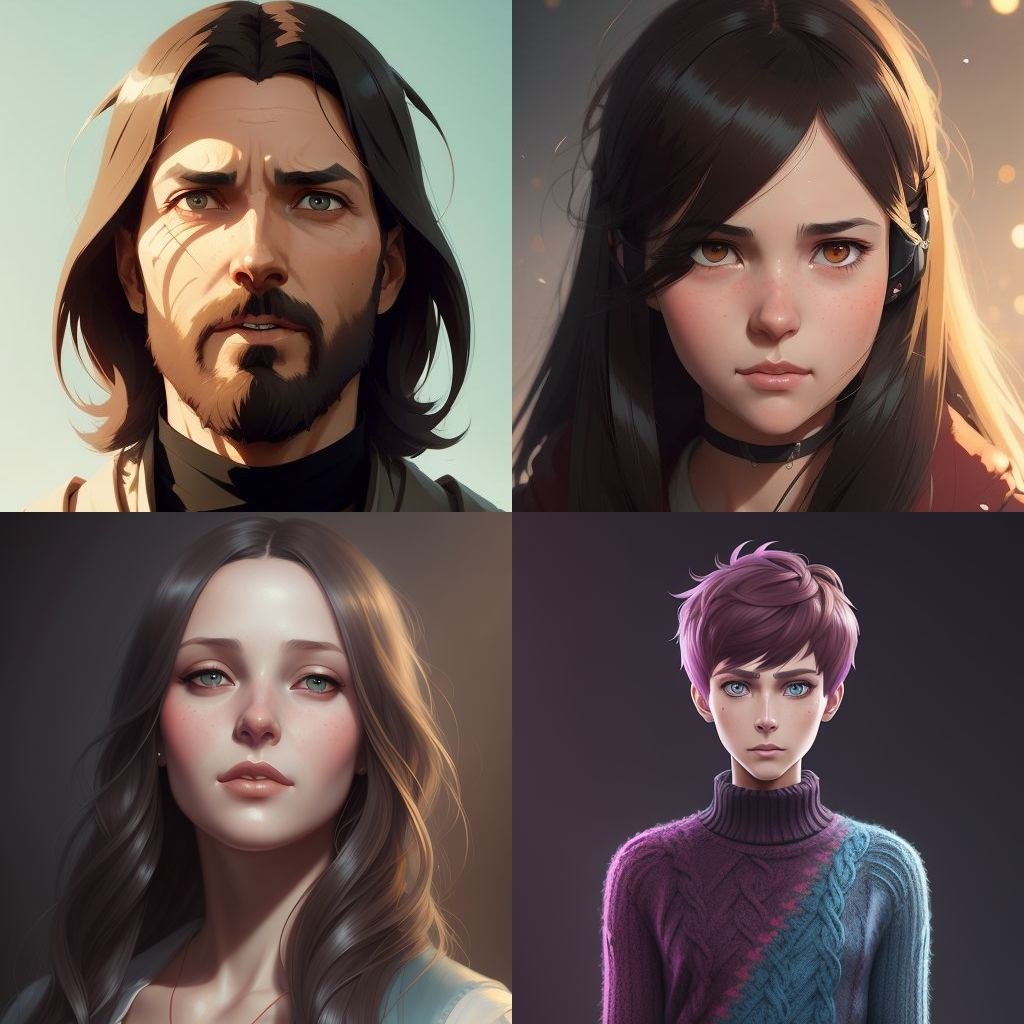
Ever stared at a blank screen, a fleeting idea in your mind, and wished you could just will it into a vivid image? That’s the magic the Perchance AI Jellymon image generator promises – transforming your wildest imaginings into visual realities. But, like any powerful tool, mastering Perchance AI Jellymon requires a bit more than just typing a few words. This comprehensive guide on Perchance AI Jellymon: Tips, Tricks & Troubleshooting will arm you with the knowledge to move beyond basic prompts, unlock stunning visuals, and gracefully navigate any creative roadblocks.
We’re not just talking about generating an image; we’re talking about generating your image, precisely as you envision it. Ready to sculpt pixels with newfound confidence? Let's dive in.
At a Glance: Your Perchance AI Jellymon Fast Track
- Be Specific, Always: Vague prompts yield vague results. Detail your subject, action, setting, and style.
- Embrace Negative Prompts: Tell the AI what not to include (e.g., "blurry, deformed, ugly") for cleaner output.
- Iterate and Experiment: Small changes to your prompt can have massive effects. Don't be afraid to tweak and regenerate.
- Break Down Complex Ideas: If the AI struggles, simplify your prompt. Focus on one core concept at a time.
- Leverage Perchance's Power: Use Perchance lists and variables to easily generate diverse variations from a single base prompt.
- Document Your Successes: Keep a simple log of prompts that delivered great results.
- Understand AI Limitations: AI isn't perfect. Be realistic about complex compositions, hands, and perfect text generation.
- Troubleshoot with Patience: Blurry images or misinterpretations often stem from ambiguous language. Refine your words.
Demystifying Perchance AI Jellymon: Beyond the Canvas
At its heart, Perchance AI Jellymon is an accessible, community-driven interface for AI image generation, built on the incredibly flexible Perchance platform. While the underlying AI models (often variations of Stable Diffusion or similar architectures) do the heavy lifting of turning text into pixels, Perchance provides the sandbox. It’s a space where creators, from absolute beginners to seasoned prompt engineers, can experiment, share, and even build their own generators around the core AI capabilities.
The beauty of Perchance isn't just in its ability to generate images, but in how it empowers you to control that generation through its unique list-based system. This means you can create dynamic prompts that evolve with each click, offering endless variations and fostering true creativity. Whether you're looking to design characters for a story, generate concept art for a project, or simply explore the frontiers of digital art, understanding Perchance AI Jellymon is your first step to unlocking a powerful creative partner. If you're new to the generator itself, you can easily jump in and start exploring.
The Art of the Prompt: Crafting Your Vision
Think of your prompt as a conversation with a highly intelligent, but incredibly literal, artist. The more clearly and precisely you describe what you want, the better the final artwork will be. This isn't just about keywords; it's about painting a picture with words.
Specificity is Your Superpower
This is perhaps the single most crucial tip. Generic prompts like "dog in a park" will yield generic results. To get something truly captivating, you need to layer on the details:
- Subject: Instead of "dog," try "fluffy golden retriever puppy."
- Action: Instead of "in a park," specify "playing fetch with a red frisbee."
- Setting: Describe "a sun-drenched meadow with vibrant wildflowers and distant oak trees."
- Style: Add artistic direction, like "cinematic lighting, hyperrealistic, octane render, trending on ArtStation."
Example: - Vague:
cat sleeping - Specific:
a sleek black cat with emerald eyes, curled up on a plush velvet cushion, soft moonlight streaming through a gothic window, chiaroscuro lighting, highly detailed fur texture, fantasy art style.
Keywords and Modifiers: Your AI Palette
Beyond basic descriptions, a whole lexicon of keywords can dramatically influence the AI's output. These act as your artistic modifiers:
- Quality & Detail:
highly detailed,ultra-realistic,4K,8K,photorealistic,masterpiece,intricate details,sharp focus. - Lighting:
cinematic lighting,golden hour,softbox lighting,volumetric light,rim light,moody lighting,backlit. - Art Styles:
oil painting,watercolor,pencil sketch,anime,cyberpunk,steampunk,impressionism,surrealism,minimalist. You can even reference specific artists, likeby Van Goghorart by Greg Rutkowski. - Composition & Perspective:
wide shot,close-up,dramatic angle,dutch angle,symmetrical,rule of thirds,bokeh. - Mood & Atmosphere:
serene,ominous,joyful,dreamy,futuristic,ancient.
Negative Prompts: What NOT to Generate
Just as important as telling the AI what you want is telling it what you don't want. Negative prompts are your quality control. This is often a separate input field in AI generators, or you can sometimes imply it within the main prompt with careful phrasing, though a dedicated field is always better.
Common negative prompt terms:ugly, deformed, bad anatomy, disfigured, poorly drawn face, poorly drawn hands, missing fingers, extra limbs, disconnected limbs, blurry, out of focus, low quality, jpeg artifacts, grayscale, monochrome, sketch, painting, watermark, signature, text, cropped, long neck, bad eyes.
Experiment with these. Sometimes, adding or removing a single term from your negative prompt can make a significant difference in image clarity and correctness.
Structuring Your Prompt for Success
While there's no single "perfect" structure, a common and effective approach follows a logical flow:
- Subject: What is the main focus? (e.g.,
A majestic dragon...) - Action/Activity: What is the subject doing? (e.g.,
...soaring over a volcanic landscape...) - Setting/Environment: Where is this happening? (e.g.,
...at twilight, with glowing embers and ash clouds...) - Style/Artistic Direction: How should it look? (e.g.,
...fantasy art, epic scale, cinematic lighting, by Frank Frazetta...) - Technical Modifiers: Quality, resolution, specific camera terms. (e.g.,
...8K, highly detailed, sharp focus, volumetric light.)
Combine these elements, separating them with commas for clarity. The AI parses these elements to build the final image.
Iteration is Key: The Prompting Loop
Rarely will your first prompt hit the bullseye. AI generation is an iterative process:
- Generate: Create an image with your current prompt.
- Analyze: What worked? What didn't? Is the lighting off? Is the subject wrong?
- Tweak: Make small adjustments. Change an adjective, add a negative prompt, try a different style keyword.
- Repeat: Keep refining until you get closer to your vision.
Think of it like tuning an instrument – small adjustments lead to perfect harmony.
Advanced Techniques for AI Artistry
Once you're comfortable with basic prompting, Perchance's unique features allow you to push your creativity even further.
Leveraging Perchance's Flexibility for Dynamic Prompts
One of Perchance's standout features is its ability to use "lists" and "variables" within your generators. This is incredibly powerful for AI image generation, allowing you to create prompts that automatically vary without constant manual input.
Imagine you want to generate images of various animals in different settings. You could create lists like this (within your Perchance list panel):
animal = a fluffy golden retriever puppy|a majestic lion|a curious red panda
setting = in a sun-drenched meadow|in a dense jungle canopy|on a snowy mountain peak
Then, your image prompt could be:[animal.selectOne] playing in a [setting.selectOne], hyperrealistic, 4K, cinematic lighting.
Every time you hit "generate," Perchance will randomly pick an animal and a setting from your lists, creating unique combinations. This is a game-changer for exploration, character design, and generating a series of related images quickly.
If you're building your own Perchance generator to incorporate Jellymon, remember the basic Perchance platform tips. For instance, to clearly instruct users on how to interact with your generator, you can add a description. As noted in general Perchance tips, you'd add [description] in the HTML panel (bottom left) and then create a list named description in the lists panel (top-right) where you can type out your instructions or context. This ensures your users understand the nuances of your specific Jellymon implementation.
Controlling Composition and Perspective
While the AI might sometimes surprise you with interesting compositions, you can guide it with specific keywords:
- Camera Angles:
overhead shot,worm's-eye view,dramatic angle,eye-level shot,low angle,high angle. - Framing:
full body shot,portrait shot,medium shot,close-up,wide shot. - Specific Elements:
centered composition,rule of thirds composition,symmetrical composition.
Adding terms likecinematic,film still, orphotographiccan also encourage more deliberate framing and depth of field.
Art Styles and Artists: Unleashing Curated Aesthetics
Want a specific look and feel? Referencing art movements or specific artists can drastically shift the AI's interpretation:
- Movement-based:
Impressionist painting,Art Nouveau poster,Surrealist art,Baroque masterpiece,Rococo style. - Artist-based:
by J.W.M. Turner,in the style of Hayao Miyazaki,inspired by Zdzisław Beksiński,art by Artgerm.
Be aware that combining too many distinct styles or artists can lead to an image that feels muddled. Start with one or two strong influences and build from there.
When Things Go Wrong: Common Perchance AI Jellymon Troubleshooting
Even with the best prompts, AI can be fickle. Here are some common issues you might encounter and how to troubleshoot them. The Perchance community and general AI art FAQs often highlight these recurring themes, emphasizing the need for clear communication with the AI.
"My images are blurry, deformed, or just plain weird!"
This is perhaps the most common frustration.
- Issue: Vague or contradictory prompts, insufficient negative prompting, or the AI struggling with complex anatomy (especially hands and faces).
- Fixes:
- Refine your prompt: Add more detail. Specify "sharp focus," "highly detailed," "clear eyes," "realistic hands."
- Beef up your negative prompt: Ensure you include terms like
blurry, deformed, bad anatomy, disfigured, extra limbs, missing limbs, poorly drawn hands, poorly drawn face. - Simplify: If you're trying to combine too many complex elements, the AI might get confused. Break it down.
- Reduce complexity for hands/faces: These are notoriously difficult for current AI models. Sometimes, a wider shot or a different angle can mitigate the issue.
"The AI isn't understanding my request; it's generating something completely different."
It feels like the AI is speaking another language.
- Issue: Ambiguity, homonyms, or your chosen keywords having a different "weight" or association within the AI's training data.
- Fixes:
- Use synonyms: If "vessel" gives you a boat, try "container" or "ship."
- Be explicit: Instead of "cool," which can mean temperature or style, try "cold," "stylish," or "modern."
- Focus on the main subject: Sometimes, less is more. If you add too many descriptive words, the AI might get lost and focus on a minor detail. Prioritize the core elements.
- Rephrase: Try restructuring your sentence or breaking it into smaller, clearer concepts.
"I'm getting repetitive or boring results."
You've hit a creative rut, or the AI is stuck in a loop.
- Issue: Prompts are too narrow, lacking variety, or the AI has "learned" a preferred way to interpret a specific keyword.
- Fixes:
- Introduce randomness with Perchance lists: As discussed earlier, use
[animal.selectOne]or[color.selectOne]to generate diverse variations. This is a powerful feature of the Perchance platform that goes beyond what many standalone AI image generators offer. - Experiment with different styles/artists: A simple change from
oil paintingtocyberpunk artcan completely refresh the output. - Remove restrictive keywords: If you're always getting the same pose, try removing "dynamic pose" and see what happens.
- Change your seed (if available): Some generators allow you to specify a "seed" number. Changing this will give you a completely different starting point for the image generation, even with the same prompt.
"My generator is slow or crashing, or images aren't loading."
This is more about the Perchance platform or your browser than the AI itself.
- Issue: Overly complex Perchance lists, browser memory issues, or a temporary server hiccup.
- Fixes:
- Simplify Perchance lists: If you have extremely long or nested lists, they can sometimes strain your browser's resources. Try streamlining them.
- Clear your browser cache and cookies: This can resolve many loading or performance issues.
- Try a different browser: If one browser is struggling, another might handle it better.
- Check Perchance status: Occasionally, Perchance might experience server-side issues. These are usually temporary.
Understanding AI Limitations: What AI Can't (Yet) Do Perfectly
It's crucial to manage your expectations. Current AI models, including those powering Jellymon, have known weaknesses:
- Text: Generating coherent, readable text within an image is incredibly difficult for AI. Expect gibberish.
- Hands and Feet: These remain notorious challenges, often appearing deformed, with too many or too few digits.
- Complex Physics/Interactions: AI can struggle with perfectly rendering complex physical interactions or highly specific cause-and-effect scenarios.
- Mathematical Precision: Don't expect perfect geometric shapes or precise numerical representations.
- Niche Knowledge: While vast, the AI's training data might lack specific, obscure knowledge, leading to misinterpretations.
Acknowledge these limitations and prompt around them. If you need text, add it in post-processing. If hands are a problem, try a different pose or composition.
Optimizing Your Workflow: Tips for Efficiency and Better Results
Making the most of Perchance AI Jellymon isn't just about individual prompts; it's about developing a strategic approach to your creative process.
Keep a Prompt Journal
This might sound old-fashioned, but it’s invaluable. A simple document or spreadsheet where you record:
- The prompt you used.
- The negative prompt.
- The result (or a link to it).
- What worked/didn't work.
- Ideas for next steps.
This log becomes your personal AI prompting library, saving you from repeating mistakes and helping you build on successes.
Leverage Perchance's Sandbox for Testing
If you're building a complex Perchance generator that feeds into Jellymon, test components in isolation. Are your lists generating the variations you expect? Is your logic sound? You can even create mini-generators within Perchance just for testing specific prompt segments before integrating them into your main project.
Batch Generating vs. Single Shots
- Single Shots: Ideal when you're meticulously tweaking a prompt, iterating slowly, and aiming for a specific outcome. You want to see the effect of each change.
- Batch Generating: Useful when you've got a solid prompt structure (especially with Perchance lists for variations) and you're exploring many different possibilities. Let the AI run several iterations, then cherry-pick the best ones.
Community Learning and Sharing
The Perchance community is a fantastic resource. Many users share their generators, often revealing the underlying prompt structures. Studying these can provide insights into effective prompting techniques and Perchance list usage. Don't hesitate to share your own creations and ask for feedback – it's a great way to learn and grow.
Understanding AI Model Updates
AI models are constantly evolving. What worked perfectly yesterday might produce slightly different results today due to updates or fine-tuning. Stay aware of any announcements from Perchance or the underlying AI model providers. Sometimes, a change that seems to break your prompts is simply the model evolving, requiring you to adapt your prompting style slightly.
FAQs: Quick Answers to Your Perchance AI Jellymon Questions
Here are some common questions users have about Perchance AI Jellymon and AI image generation in general.
"Is Perchance AI Jellymon free to use?"
Yes, Perchance AI Jellymon, like the Perchance platform itself, is typically free to use for basic generation. More advanced features or higher usage tiers for the underlying AI models (if any) might have different conditions, but the core functionality is usually accessible without cost.
"Can I use my generated images commercially?"
This is a complex question with evolving answers. Generally, images generated by open-source AI models like those often powering Jellymon often fall into a permissive license, but it's crucial to check the specific terms of use for Perchance AI Jellymon itself, as well as the underlying AI model if specified. When in doubt, assume non-commercial use or seek legal advice.
"How do I save my generated images?"
Most browsers allow you to right-click on an image and select "Save image as..." or "Download image." On mobile, you can usually long-press the image to get a similar option.
"What are the best image aspect ratios to use?"
Common aspect ratios include:
- 1:1 (Square): Great for portraits or symmetrical subjects.
- 3:2 or 4:3: Standard photographic ratios, versatile for many scenes.
- 16:9 (Widescreen): Ideal for landscapes, cinematic scenes, or wallpapers.
- 9:16 (Tall): Perfect for mobile-friendly content or vertical portraits.
Experiment to see which ratio best fits your vision, as it significantly impacts composition.
"Why do some prompts work better than others, even if they seem similar?"
AI models learn from vast datasets. The "success" of a prompt often depends on how well its keywords align with concepts the AI has strongly associated in its training. Specific phrasing, the order of words, and even subtle nuances can tap into different aspects of the AI's learned knowledge, leading to vastly different results. It's less about human logic and more about statistical associations within the model.
Beyond the Initial Spark: Taking Your AI Creations Further
Generating an image is just the beginning. Your AI creations can be starting points for even grander projects:
- Post-processing: Don't be afraid to take your AI-generated images into an image editor (like Photoshop, GIMP, or even a basic photo editor) to refine them. Adjust colors, crop, add details, or fix minor imperfections.
- Integrating with other Perchance generators: Use your AI-generated images as character portraits for a text adventure game you're building on Perchance, or as visual elements for a random lore generator.
- Inspiration for traditional art: AI images can serve as fantastic visual references for painters, illustrators, or sculptors looking for new ideas or perspectives.
- Share and collaborate: The Perchance community thrives on shared creativity. Post your favorite creations, share your prompt structures, and inspire others.
Your Next AI Adventure Starts Now
You now possess a robust toolkit for navigating the exciting world of Perchance AI Jellymon. From crafting highly specific prompts and mastering negative keywords to leveraging Perchance's dynamic list system and troubleshooting common creative blocks, you're ready.
The journey of AI art generation is one of continuous learning and discovery. Embrace the experimentation, celebrate the unexpected results, and don't be discouraged by initial failures. With these tips and tricks, you're well-equipped to transform your ideas into stunning visual realities. So go ahead, unleash your imagination, and start creating!